Filter by category
In this program, a group of experienced primary school teachers have become practitioner researchers, focusing on strengthening their practice and improving outcomes for students. Program facilitators Dr Hilary Emery and Dr Neil Saunders share their experience of working with these teachers.
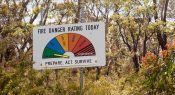
Staff at a school in a bushfire-sensitive area have teamed up with their local fire service to deliver a project encouraging students to find new ways to prepare for a natural disaster. Here, we speak to the Assistant Principal about the success of the program.
Associate Professor Lynn Barnett-Morris joins Teacher to discuss her longitudinal study The education of playful boys: class clowns in the classroom. For the last three years she’s been researching Kindergarten-aged children to determine how playfulness in the classroom is viewed by the children themselves, their classmates and their teachers.
The most recent OECD Programme for International Student Assessment (PISA) examines student ability in collaborative problem solving. Today's infographic shows the results from some of the 50+ participating countries.
Can being confused actually be a beneficial part of the learning process? And in what ways can teachers allow for more uncertainty in their classrooms? These are questions being explored by researchers at the Science of Learning Research Centre.
School leadership is an increasingly complex role and research suggests the demands certainly take their toll on the health and wellbeing of principals. Associate Professor Philip Riley joins The Research Files to discuss the latest findings of the Australian Principal Occupational Health, Safety & Wellbeing Survey.
In today’s Q&A, we speak to Deanne Plaza (Science and Maths teacher at Craigslea State High School, Queensland) about a collaborative action research project to integrate ICT resources into senior biology classes.
The importance of families having fun with one another has been highlighted in a new report which shows that family cohesion is a vital ingredient for early adolescents having a good life. Lead author Dr Petra Lietz joins Teacher to discuss the impact this has on student learning.
Today the Teacher team ventures down to Room 3 – the basement archives at the Australian Council for Educational Research – to bring you education quotes from some of our favourite historical titles.
Dr David Armstrong from Flinders University is our guest in today’s Behaviour Management podcast. We explore how certain behaviour management models are simply ineffective, particularly for students with learning or mental health difficulties, and discuss his research in this area.
Facebook
YouTube
SoundCloud
Apple Podcasts
Spotify
RSS feed
Linkedin