Filter by category
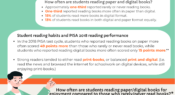
An OECD report 21st-Century Readers: Developing Literacy Skills in a Digital World analyses data from the 2018 PISA test and student survey to report on the reading habits of 15-year-olds in OECD countries. Find out more about how reading in digital and paper formats affects students’ reading performance and enjoyment in today's infographic.
What is involved in moving museum content online for educational purposes? What are the benefits? What are the challenges? In this Q&A, we speak with Melina Mallos, former Education Manager at the Museum of Chinese Australian History, about the process of digitising museum content.
‘Long gone is the traditional view of a museum as being static and dusty. Contemporary museums promote interactive exhibits, experiential learning experiences and technological “open” accessibility.’ Dr Deb Cohen explains how teachers can use museum education programs to support classroom learning.
The two most recent winners of the Prime Minister’s Prizes for Excellence in Science Teaching join us in this podcast. They each share how they’re improving student outcomes in their own school settings and their top tips for other Science teachers across the country.
If you’re in a co-education school, look at student enrolments for STEM subjects and participation in STEM-related clubs and extracurricular activities – is there a gender imbalance? A new report shares global examples of effective interventions from primary and secondary education settings.
In his first Teacher column of the year, OECD Director for Education and Skills Andreas Schleicher discusses the Trends Shaping Education report, which examines the major economic, political, social and technological trends affecting education.
Twenty Things to Do with a Computer Forward 50, edited by Dr Gary Stager, celebrates the vision of Cynthia Solomon and Seymour Papert in their seminal 1971 paper. In this exclusive extract, Martin Levins shares ‘Some Modern Things to Do with a Computer’, with examples from Australian schools.
What are the future directions of teaching writing? Do students write differently when supported by ICT? And, how often do teachers teach writing? In this edition of Researching education: Five further readings, we’re sharing resources on the topic of teaching writing that seek to answer these questions.
Algorithms are a key component of computational thinking, and the foundations for developing these skills starts in the early years. What are some of the day-to-day ‘unplugged activities’ that offer teachers easy opportunities for emphasising and building these skills?
What are the key characteristics and concepts of computational thinking? And, how can a student’s performance of computational thinking be assessed? In this edition of Researching education: Five further readings, we are sharing a range of resources which seek to answer these questions and more.
Facebook
YouTube
SoundCloud
Apple Podcasts
Spotify
RSS feed
Linkedin