Filter by category
One of the benefits of being a teacher is the ability to cultivate transferable skills that can be applied across different schools and states. In this article, Foxwell State Secondary College teacher Samantha Holt shares her experience of starting a new job interstate.
National charity ADHD Australia surveyed 1024 primary, secondary and tertiary educators in all Australian states and territories to identify their knowledge, training and experience to support students with Attention Deficit Hyperactivity Disorder (ADHD). Find out more in today’s infographic.
Mathematics teacher Holly Millican shares three fun classroom activities she uses with her students to help engage her students in learning algebra: Solve Me Mobiles, Digit Disguises and combining like terms.
‘To say that teachers have a significant impact on students’ motivation and engagement is not controversial, nor particularly enlightening. Trucks can be filled with the research papers that show this.’ In this reader submission, Professor Andrew Martin says a more informative exercise is to dig into the ways teachers make a difference to students’ motivation and engagement.
Home support of children’s literacy skills in the early years is a well-known indicator of their reading progress at the start of school. A new study has explored how different reading experiences at home have an impact on children’s continued reading development at school.
‘Clearly, the decline in Australia’s PISA scores is a complex problem, necessitating complex and varied solutions. What is evident from these data, however, is that the decline in scores cannot be attributed to one particular school sector, but it is shared across the whole system.’ In her latest Teacher column, Sue Thomson examines achievement, school climate and student wellbeing in Australia’s three school sectors.
What makes leadership impactful in regional, rural and remote schools? In this episode of The Research Files, we chat with Scott Eacott, unpacking some of the concepts covered in his recent research on leadership in regional, rural and remote schools.
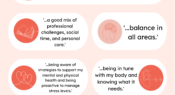
In our annual reader survey we ask you to finish the sentence ‘to me, wellbeing means…’. In this infographic, we share some of your responses.
How do you support and celebrate neurodiversity in the classroom? What strategies do you use to ensure all students in diverse classrooms thrive at school and beyond? In this article, we outline five further readings which explore neurodiversity in education, and offer strategies for effective and informed teaching.
What makes a Vocational Education and Training (VET) program successful? In this article, we talk to Linda Snoxall, VET Coordinator at Mildura Senior College – host of one of the eight successful VET programs identified in a recent report from the National Centre for Vocational Education on the factors of successful VET programs in schools.
Facebook
YouTube
SoundCloud
Apple Podcasts
Spotify
RSS feed
Linkedin