Filter by category
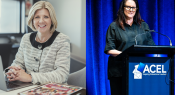
Ahead of the 2026 ACEL National Conference – presented in partnership with ACER – Teacher editor Jo Earp is joined by Lisa Newland, CEO of ACEL, and Lisa Rodgers, CEO of ACER, to unpack the conference’s theme of bold leadership. Lisa and Lisa tell us about their approach to leadership, what they’ve learned over the years, and more.
Ahead of the National Education Summit in Melbourne this September, we sat down with Andrew Fuller – clinical psychologist, author and family therapist – to discuss his work on converting neurodiversity into neuro-advantage. In this episode, we explore transitions and regulation, school belonging and finding your people, and how educators can help turn neurodivergence into a genuine advantage for young people.
‘How can schools help young people learn to use AI thoughtfully, ethically and effectively?’ In today’s article Kara Baxter – Deputy Principal, Learning and Teaching, at Strathcona Girls Grammar School in Melbourne, Victoria – shares the thinking and process behind the development of the school’s AI policy.
‘Induction and mentoring is about bringing your academic capability to life in the reality of a classroom.’ In today’s podcast, CEO of AITSL Tim Bullard joins Teacher Deputy Editor Rebecca Vukovic to talk all about improving induction for both early career teachers and school leaders.
In The Research Files Episode 105, Jo Earp is joined by Dr Alexandra Hennessey from the University of Manchester to talk about a research study exploring how different schools in the UK have adopted the Well Schools framework. Their conversation focused on 2 aspects – the role of teacher wellbeing and the importance of a whole school approach.
The Zayed Sustainability Prize is a global award that recognises organisations and high schools that are delivering practical, scalable solutions to some of the world’s most pressing sustainability challenges. Last week, the Prize announced the cohort of 2026 winners in a ceremony held during Abu Dhabi Sustainability Week. In today’s article, we learn more about the 6 winning high schools from 6 world regions.
It is important that teachers feel confident to respectfully and effectively address religion and beliefs in diverse classrooms. In today's podcast, Professor Peter Sherlock discusses why it’s important for schools to engage with religion and belief systems, how to engage students in meaningful conversations about religion in a respectful way, and resources available to help teachers build their confidence in this space.
Teacher editor Jo Earp finds out how the Aspect Learning Improvement Collaborative is using a mainstream learning framework developed by Dr Lyn Sharratt, adapted to suit an autism-specific education setting. We’ll hear from Lyn, Aspect Education's Deputy National Director Karilyn Gumley and principals Kaye Perry, Joanne Tisdell, and Michelle Zikmundovsky.
More than 800 teachers from over 200 schools in every state and territory have taken part in the Strengthening Induction through Quality Teaching Rounds project. The evidence collected to date shows that participation in Quality Teaching Rounds has reduced burnout and improved wellbeing and professional community.
‘Technology does not work in the same way or to the same effect in all classrooms and with all students.’ In the final instalment of his 3-part series on technology in education, Dr Ralph Saubern addresses the challenges – and opportunities – in evaluating the impact of EdTech on learning outcomes.
Facebook
YouTube
SoundCloud
Apple Podcasts
Spotify
RSS feed
Linkedin