Filter by category
St Theresa’s Primary School Albion in Melbourne’s west is strengthening science learning through a knowledge-rich curriculum focused on Australia’s Great Southern Reef. In today’s article Literacy Leader Jackie O'Connor-Croydon shares more about the P-6 program that integrates field experiences, expert-led learning and sequenced content, to deepen students’ scientific understanding.
In early childhood settings, educators often navigate a familiar tension: how to honour children’s play as the foundation of learning while ensuring curriculum expectations are met? In today’s article, early childhood educators Helen Bartlett and Lauren Bastion explain how they built a curriculum-tracking platform that analyses children’s learning stories and generates visual curriculum insights.
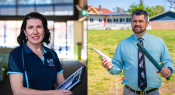
In today’s episode Dominique Russell speaks with the 2 recipients of the 2025 Prime Minister’s Prizes for Excellence in Science Teaching – Paula Taylor from the ACT and Matt Dodds from NSW. They share the lesson activities that are a hit in their science classrooms, the teachers that had an impact on them, and how they’re sharing their knowledge with other educators.
In this expert Q&A Amy Ayres – President of the Science Teachers’ Association of New South Wales – discusses integrating technology into science instruction and improving students’ critical thinking or inquiry skills. These were 2 areas of future PD need highlighted in the latest Australian TIMSS teacher questionnaire findings.
‘The feedback from students reflects a growing desire for partnership. They aren’t just asking for permission to use AI, they’re asking for guidance, collaboration, and trust.’ Georgia Wignall shares new insights from a Queensland school research partnership on why students are leaning on AI tools and how they want teachers to support them.
Education has the potential to foster curiosity and empower future scientists through engaging hands-on learning, proven to positively impact students and teachers. In this Q&A, Bo Stjerne Thomsen, Head of Education Impact at LEGO Education explores the vision, development, and potential of LEGO® Education Science.
Teacher editor Jo Earp finds out how the Aspect Learning Improvement Collaborative is using a mainstream learning framework developed by Dr Lyn Sharratt, adapted to suit an autism-specific education setting. We’ll hear from Lyn, Aspect Education's Deputy National Director Karilyn Gumley and principals Kaye Perry, Joanne Tisdell, and Michelle Zikmundovsky.
‘Staff are integrating AI into their practice in ways that align with their readiness, confidence, and classroom context.’ In today’s article, Georgie Facci from Scotch College Junior School, Adelaide, shares how the school is embedding AI into the teaching and learning across the curriculum, and how staff are building their confidence and capabilities to foster a culture of empowered experimentation.
What are the persistent teaching dilemmas you find yourself thinking about in your spare time and circling back to time and again? Professor Brianna Kennedy from the University of Glasgow joins the podcast to talk about a 2-stage process for cracking persistent challenges in the classroom, how teachers can use it in practice, and the impact it has on student learning and engagement.
This term, thousands of 15-year-olds around Australia are sitting PISA – showing how they can apply their knowledge and skills to real-life problems and situations. Here, we look at what’s new for the 2025 cycle of this global assessment, and how teachers and leaders can use PISA insights to inform their own practice and drive school improvement.
Facebook
YouTube
SoundCloud
Apple Podcasts
Spotify
RSS feed
Linkedin