Filter by category
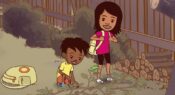
Little J, Big Cuz and their teacher Miss Chen are heading back to class for a third season of their Logie-award winning animated children’s series, which supports the transition from home to school for Indigenous children and their families.
The Connection is a network of high-performing school leaders working in some of Australia’s most challenged communities. They’ve been reflecting on successful practices in their own schools since the start of the pandemic. Today’s article shares their top five recommendations for learning through COVID.
As a school, fostering strong relationships with the wider community has wide-ranging benefits to student outcomes. In this edition of Researching education: Five further readings, we’re sharing five readings on the topic of school-community relationships.
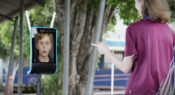
For students who are unable to attend normal classes in school, a telepresence robot represents a very real solution to a very difficult situation and has the potential to transform their lives. Dr Susan O’Donnell and Adrian Rayner explain more, and share comments from teachers and students who’ve been using the technology.
Professor Amy Cutter-Mackenzie-Knowles, Executive Dean of the Faculty of Education at Southern Cross University, joins The Research Files this month to talk about the Childhood Nature Play study. We’ll be chatting about the different types of nature play, and the teaching and learning resources that have been co-designed as a result of the research project.
In a three-part series, we are delving into the Civics and Citizenship learning area of the Australian Curriculum, and some aspects of the Australian Curriculum: History to explore students’ misconceptions, and to share some lesson activities to help your planning for 2022. This final article focuses on ‘Australian history’ and ‘Civics and citizenship and history skills’.
In her final Teacher column of the year, Dr Sue Thomson explores data from a new large-scale survey of young people’s social and emotional skills that reveals significant differences between students from advantaged and disadvantaged socioeconomic backgrounds.
Barbara Gillis, an educator working to develop curriculum materials for a peace education program to be piloted in South Australia, shares her review of Prem Rawat’s book ‘Hear Yourself – How to find Peace in a Noisy World’.
A report released by the Australian Government Department of Education, Skills and Employment, addresses the unique challenges faced by school leaders in regional, rural and remote schools and outlines four key qualities of school leaders achieving high impact in these settings.
Several states have banned financial institutions from delivering banking and branded education programs in schools, paving the way for school-led programs free from commercial interests. In today’s reader submission Carly Sawatzki, Jill Brown, and Peter Saffin outline some guiding criteria to help schools consider ways to strengthen their financial education programs.
Facebook
YouTube
SoundCloud
Apple Podcasts
Spotify
RSS feed
Linkedin