Filter by category
Financial technology developments such as cashless transactions and in-game purchases, and risks such as scam emails and texts warrant teaching about. Carly Sawatzki, Jill Brown and Peter Saffin ask: ‘In what ways are your students financially active, and how is your school preparing them for informed financial participation?’
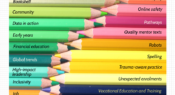
What do you need information on? High-impact school leadership? Data in action? Using quality mentor texts? Online safety? The tenth Teacher alphabet brings you quick links to popular content that you might find useful. Download the PDF for a hyperlinked version.
A majority of teachers have now had experience with online teaching thanks to the pandemic. But, what can we learn from schools who were teaching online long before COVID-19 restrictions? Jeremy Kwok and Su Temlett from Australian Christian College join Teacher to share the advantages.
Our guest on episode 72 of The Research Files is Professor Joseph Ciarrochi from Australian Catholic University’s Institute for Positive Psychology and Education. He’s the lead researcher for projectHOPE – a program that’s notched up success in re-engaging at-risk secondary students with their schooling.
Coping with stress, mental health, and school and study problems were the top three concerns of young people last year, according to the most recent findings from a large study. In this Q&A, two of the report’s co-authors explain how educators can support their students in these areas.
In his first Teacher column of the year, OECD Director for Education and Skills Andreas Schleicher discusses the Trends Shaping Education report, which examines the major economic, political, social and technological trends affecting education.
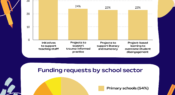
Philanthropic funding is one way school leaders can access support to implement and enhance initiatives and projects. Australian charity Schools Plus recently published details of applications for its latest round of grants. The requests from schools provide a snapshot of the initiatives and projects educators are seeking funding for.
An overwhelming majority of teachers don’t get enough time to prepare for effective classroom practice or high-quality lesson planning, according to new Australian research. The Grattan Institute report says teaching quality is suffering and students are losing out.
Twenty Things to Do with a Computer Forward 50, edited by Dr Gary Stager, celebrates the vision of Cynthia Solomon and Seymour Papert in their seminal 1971 paper. In this exclusive extract, Martin Levins shares ‘Some Modern Things to Do with a Computer’, with examples from Australian schools.
‘Considerable momentum is building around the belief that education will increasingly benefit from teachers becoming more ‘research-engaged”…’ Our latest reader submission discusses the phenomenon of Research-Invested Schools and shares examples of what’s happening in Australia.
Facebook
YouTube
SoundCloud
Apple Podcasts
Spotify
RSS feed
Linkedin