Filter by category
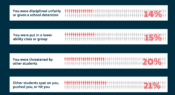
Data collected from Aboriginal and Torres Strait Islander children aged between 10 and 15 years old highlights the prevalence of racism and racial discrimination experienced by young people. Here, we share their responses to seven statements relating to self-reported experiences of direct racial discrimination in a school setting.
Getting students engaged and invested in their learning leads to improved outcomes. It also makes the lesson a more enjoyable experience for everyone, including the teacher. Enhanced lesson engagement was just one of the benefits of a small-scale study focusing on quality teaching in Physical Education.
Children with a chronic health condition perform below the basic academic requirements in literacy and numeracy when compared to their peers, a study of more than 397 000 children in New South Wales has found.
How effectively do you think you’re delivering Indigenous content in the curriculum? Would you say you have enough knowledge and confidence in this area? A program established by the University of New South Wales’ Matraville Education Partnership is looking to address these two areas of teacher practice.
A quarter of Australians aged 15 years and over participated in unpaid voluntary work through an organisation in 2020, whilst almost half provided unpaid work or support to others outside their households. In today’s article we speak to Dr Darja Kragt from the University of Western Australia about why people are motivated to volunteer their time, and how it boosts their overall sense of wellbeing.
As COVID-19 vaccination rates increase and schools here in Australia and around the world return to on-site learning, teachers and students will need to reestablish face-to-face relationships and routines, take time to reflect on their home learning experiences and think about where to from here. Dr Gail Brown and Dr Carl Leonard offer some advice and questions for reflection in today’s reader submission.
‘I love to help others and feel genuine satisfaction when I can do something for someone else.’ Principal of St Agatha’s Primary School in Clayfield, Queensland, Anne-Marie Maw shares why she enjoys volunteering her time to help others, and how it has become part of her own wellbeing strategy.
Australian students report greater levels of respect for people from other cultures and more positive attitudes towards immigrants than the OECD average, according to a new report from the Australian Council for Educational Research (ACER). Find out more in today’s article.
‘Our strong recommendation is to get creative and put real life contexts front and centre of your lessons, making mathematics relevant, engaging and meaningful…’ Justine Sakurai, Carly Sawatzki and Dave Tout discuss contextualised teaching and learning of mathematics through the exploration of six numeracy contexts, and provide several examples of what this could look like in the classroom.
A blob trying to break into the Underworld, a scientist jumping through size-altering portals, and a man who wakes up dazed and confused in a scrapyard – these are some of the protagonists from winning games in this year’s Australian STEM Video Game Challenge.
Facebook
YouTube
SoundCloud
Apple Podcasts
Spotify
RSS feed
Linkedin