Filter by category
As an educator, how do you approach talking to your students about climate change? Can you identify key gaps in students’ knowledge? How do you manage issues of eco-anxiety and climate grief? In this article, we outline five further readings which explore climate change education in Australia.
Brisbane’s Brigidine College, Indooroopilly has changed the way it supports pre-service and early career teachers. In the second part of our Q&A with Allison Johansen (Assistant to the Principal, Professional Teaching and Learning) we find out more about the Pre-Service Teacher Fellowship Program and its positive impact.
Attending a professional learning event is a great way to reflect on what’s happening in your own school and improve practice. For leaders at this Brisbane college, it prompted a new approach to supporting and retaining pre-service and early career teachers. Find out more in today’s Q&A.
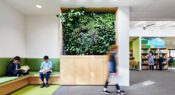
To be fit for purpose well into the future, learning spaces within schools will need to be flexible. Two schools in Victoria, Australia, have recently undergone refurbishments to develop new, flexible facilities, and have both been recognised at the 2022 Learning Environments Australasia Awards.
Early-career teacher at Tasmanian eSchool, Ruby Lyons-Reid, has recently been recognised for her use of digital resources to engage students in learning about First Nations histories and cultures, and in this article, she shares the learning activities she’s found to have the most impact.
Get Up! Stand Up! Show Up! is the theme for NAIDOC Week 2022. Here, we take you through some of the NAIDOC Week resources for educators to use in the classroom. We also talk to Nerae Preece from Badger Creek Primary School, and Connor Russell from Newtown State School, about what their schools are doing for NAIDOC Week.
How can schools better engage families in their students’ learning? Dr Rebecca Winthrop, Senior Fellow and Director of the Centre for Universal Education (CUE) at the Brookings Institution, shares the findings from a research initiative she has led at CUE on school engagement with families, along with some practical tips for building school-family engagement.
When we think of transitions in education, often what comes to mind are the ‘macro’ transitions from home to early childhood settings, and then into school and beyond. But just as important are the everyday ‘micro’ transitions between spaces, activities and people. Here, we speak with Dr Loraine Fordham about why these transitions are important, and tips for educators to handle them sensitively.
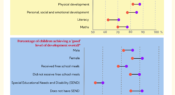
A recent study has analysed the experience of over 3000 children aged four and five attending preschool in the United Kingdom during the COVID-19 pandemic. Children's achievement in prime learning areas, as well as their overall development, during September 2020 and July 2021, were compared to national pre-pandemic averages recorded in the 2018/19 school year.
In this podcast special, we’re joined by Corey Tutt OAM, founder and CEO of Deadly Science – an organisation that provides science resources to remote schools in Australia, to inspire and celebrate the next generation of Indigenous people in STEM.
Facebook
YouTube
SoundCloud
Apple Podcasts
Spotify
RSS feed
Linkedin