Filter by category
Andreas Schleicher – Director for Education and Skills at the OECD and long-time Teacher columnist – joins us from Paris for this episode to give his take on all things 2020, talk about the longer term impacts of the school shutdowns and share how different education systems have responded to the pandemic restrictions.
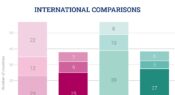
Trends in International Mathematics and Science Study (TIMSS) measures how well Year 4 and Year 8 students from around the world are performing in science and mathematics. In this infographic we look at Australian student achievement over time.
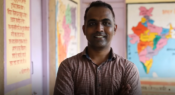
The annual Global Teacher Prize has been awarded for 2020. Ranjitsinh Disale, a primary school teacher in India who has transformed education for girls in his community, has been named winner of the US $1 million award. Here, we look at how he’s improving learning at his school.
Australian students have performed significantly better in the latest cycle of the Trends in International Mathematics and Science Study in Year 8 mathematics and Year 4 and Year 8 science – but not in Year 4 mathematics – than they did in 2015. Here, we take a closer look at the results.
One-to-one and small-group tutoring have emerged as a catch-up strategy for schools to address student learning gaps as a result of the COVID-19 pandemic, with government funded programs announced here in Australia and overseas. Dr Pauline Ho and Dr Tanya Vaughan look at the evidence and give five key takeaways for school leaders and teachers.
In this monthly series, we take a look at some further readings available on a particular topic, including open access research papers from various online catalogues. This month’s theme is science education.
Researchers at the University of Wollongong in New South Wales have been working with teachers and school leaders around Australia to better understand what motivates them to be involved in school-university partnerships. Here they share some of their study findings.
You and your students may have access to lots of technology in your classroom, but are you making the most of it? The Digital Pedagogies Lighthouse Project at St Joseph’s Catholic Primary School has seen staff make the shift from using tech tools for productivity and presentations to embedding them in authentic mathematics learning.
Working with colleagues to assess and moderate student work enables teachers to make consistent judgements of achievement and progress. In our latest reader submission, Learning Specialist Jeanette Breen shares how Templestowe Heights Primary School has improved its writing moderation process and five tips for a more successful experience.
‘While this crisis has exposed the many inadequacies and inequities in our education systems, this moment also holds the possibility that we won’t return to the status quo when things return to “normal”,’ Andreas Schleicher writes in his latest Teacher column.
Facebook
YouTube
SoundCloud
Apple Podcasts
Spotify
RSS feed
Linkedin