As an educator, you’ll recognise the importance of providing time for young children to play and to learn through play. However, findings from a 4-year study conducted in Ukraine suggest that playful learning can be a protective factor for children, helping foster literacy and social-emotional skills in times of crisis.
The study of classic novels is a staple in many secondary English classrooms across the country. In this reader submission, English and History teacher Alec Santucci shares how he has approached including discussion throughout the learning of the classic novel, ‘To Kill a Mockingbird’, with his year 11 students – sharing strategies that have proved effective in his own classroom for enhancing student engagement
The Australian Council for Educational Research (ACER) recently released an in-depth analysis of Australian student and principal questionnaire responses, collected as part of the OECD’s latest Programme for International Student Assessment (PISA). In this Q&A, we speak with ACER’s Lisa De Bortoli and Catherine Underwood about what Australia’s results tell us.
Teacher librarians and school libraries play important roles in developing student reading habits, information literacy capabilities, and promoting cross-curriculum learning. In this edition of Researching education: 5 further readings, we are looking at the topic of school libraries
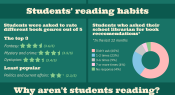
A Deakin University study delves into secondary school students’ reading habits and explores the prevalence of reading for pleasure amongst teenagers. In this infographic we share some of the findings.
How do you continue to innovate and adapt your teaching to best equip students for a fast-changing, digitally driven world? In Singapore, the Ministry of Education has implemented regular home-based learning days, where students are tasked with taking charge of their own learning.
‘I called it student driven acquisition, but it was essentially: let’s go to the bookstore.’ Teacher Librarian Catherine Barnes seized a unique opportunity, taking her Endeavour College students to the bookstore to select some titles for the newly renovated school library. We caught up with her to unpack the impromptu learning experience.
For students who may not have access to appropriate books at home, libraries can play a key role in providing this access. New analysis of Australian data from the Progress in International Reading Literacy Study (PIRLS) sheds light on year 4 students’ access to school libraries, revealing 7% attend schools where they’re not allowed to borrow books to take home.
After her double win at the National Excellence in Teaching Awards for her work helping teachers and schools in New Zealand implement structured literacy into their practice, Amie Roberts speaks to Teacher about how this approach empowers all students.
Using books in the classroom is a great way to implement new learning opportunities. Check out this article for some fun ideas for incorporating books into your classroom.
Facebook
YouTube
SoundCloud
Apple Podcasts
Spotify
RSS feed
Linkedin