Filter by category
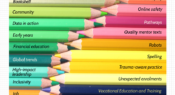
What do you need information on? High-impact school leadership? Data in action? Using quality mentor texts? Online safety? The tenth Teacher alphabet brings you quick links to popular content that you might find useful. Download the PDF for a hyperlinked version.
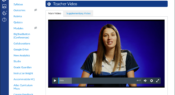
A majority of teachers have now had experience with online teaching thanks to the pandemic. But, what can we learn from schools who were teaching online long before COVID-19 restrictions? Jeremy Kwok and Su Temlett from Australian Christian College join Teacher to share the advantages.
Our guest on episode 72 of The Research Files is Professor Joseph Ciarrochi from Australian Catholic University’s Institute for Positive Psychology and Education. He’s the lead researcher for projectHOPE – a program that’s notched up success in re-engaging at-risk secondary students with their schooling.
Coping with stress, mental health, and school and study problems were the top three concerns of young people last year, according to the most recent findings from a large study. In this Q&A, two of the report’s co-authors explain how educators can support their students in these areas.
Having meaningful friendships as an adult is important for our overall health and wellbeing. So, as we head back to work for another year, how can we make sure we maintain these friendships? What about making new friends? Associate Professor Roger Patulny shares some strategies with Wellbeing by Teacher.
In the first of two articles on data-driven school improvement, Patrick Sanders (Associate Head of the Crowther Centre, Curriculum and Assessment at Brighton Grammar School) shares the steps that have been taken to capture better quality, and more actionable, data to inform decision-making.
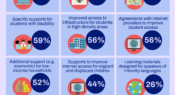
An OECD survey explored how 27 education systems across the globe responded during school closures in 2020. This infographic shows how widely nine different measures were used for at least one level of schooling to target students at risk of exclusion from distance education platforms.
With Term 1 just around the corner in Australia, it’s a great time to start brainstorming events and themes to tie in to your lesson planning for the new school year. We’ve rounded up some of the key dates in each term to help get you started.
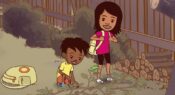
Little J, Big Cuz and their teacher Miss Chen are heading back to class for a third season of their Logie-award winning animated children’s series, which supports the transition from home to school for Indigenous children and their families.
The Connection is a network of high-performing school leaders working in some of Australia’s most challenged communities. They’ve been reflecting on successful practices in their own schools since the start of the pandemic. Today’s article shares their top five recommendations for learning through COVID.
Facebook
YouTube
SoundCloud
Apple Podcasts
Spotify
RSS feed
Linkedin