Filter by category
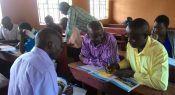
Yesterday we brought you news of the 2017 WISE Award winners. Here we take a look at the remaining nine finalists, including a collaborative learning model aimed at increasing teacher motivation and professionalism in India and Uganda.
The 2017 WISE (World Innovation Summit for Education) Awards were announced overnight. This year’s winners include a mentoring project supporting girls’ education in Tanzania and an accelerated learning program helping out of school children.
Today’s reader submission is by Sir Jim Rose, author of the influential 2006 UK report The Independent review of the teaching of early reading, which led to the adoption of mandatory teaching of systematic synthetic phonics in English primary schools. Here, he discusses ‘the simple view of reading’ and its implications.
A government advisory panel has recommended the introduction of national literacy and numeracy checks in Year 1 as a way of identifying students who need additional support. Here we take a closer look at the report, including the benefits and challenges raised by teachers and principals.
OECD Director of Education and Skills Andreas Schleicher says Indigenous students face tough challenges in most education systems, but analysis of outcomes in Canada, New Zealand and Queensland, Australia reveals sustained improvements have been achieved through focusing on several or all of six areas.
Student participation rates in advanced maths and science subjects is declining. In today's podcast, Michael Jennings, an Associate Lecturer at the University of Queensland joins Teacher to discuss his research which explores factors influencing student selection of senior secondary maths subjects.
Susan Lovett is an Associate Professor in Educational Leadership at the University of Canterbury, New Zealand. In this Q&A, Lovett joins Teacher to discuss what teacher leadership is, and why she believes it is a mistake to attribute school leadership activities only to those residing in formal roles.
Our annual Teacher reader survey encouraged educators to tell us how they’re using our articles, videos, podcasts and infographics in their professional settings. Hundreds of you shared your insights – here’s a selection.
Thinking about how to engage, motivate and challenge students is all part of good lesson planning. Moving beyond the classroom, the same considerations can apply when creating and updating outdoor spaces for recreation and physical education.
In this regular blog, Miss Chen will be sharing some of the F-2 resources she’s been using in her classroom, which are all available to download for free via the Little J & Big Cuz website.
Facebook
YouTube
SoundCloud
Apple Podcasts
Spotify
RSS feed
Linkedin