Filter by category
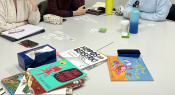
In Episode 101 of The Research Files Teacher editor Jo Earp is joined by ACER Senior Research Fellow Dr Rebecca Taylor to explore survey data from 2 reports into music teaching and music education in primary schools, all about the ‘what’, ‘when’, and ‘how’ music learning is delivered.
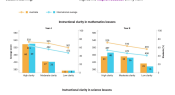
Latest Trends in International Mathematics and Science Study (TIMSS) data show the degree to which teachers are clear in the way they deliver the mathematics and science curriculum is likely to influence student learning. This includes ensuring students understand the learning goals for each lesson, being able to explain key concepts, and giving students helpful feedback. Find out more in this infographic.
‘We just want to make sure that the students are gaining their confidence … and really opening their eyes to what opportunities are out there at our doorstep’. We speak with Dripstone Middle School Principal Nektaria Pikoulos and Angela Sheedy from Charles Darwin University about a partnership that’s not only supporting student career pathways, but their health and wellbeing too.
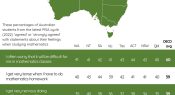
Each cycle of the Programme for International Student Assessment (PISA) includes a student questionnaire. One topic – mathematics anxiety – is characterised by feelings of tension, fear or apprehension when a person is faced with mathematics-related tasks. Today’s infographic provides useful prompts for teachers when considering their own students.
Students develop their capabilities when they transfer and apply their skills and knowledge to different contexts, including real-world scenarios. In this article we speak to the teacher advisors of the Australian winners of the International Mathematical Modeling Challenge (IM2C) about the benefits for students, and their own practice.
In this episode of The Research Files podcast, Teacher editor Jo Earp chats to Jenni Ingram, Professor of Mathematics at the University of Oxford, about the OECD’s Unlocking High-Quality Teaching report. Alongside insights from 150 schools in 50 countries, it explores 20 practices that teachers draw on to achieve 5 key teaching goals.
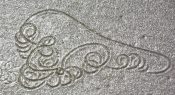
New research from academics at the University of the Sunshine Coast shows that maths and science educators can use visual cues in nature like animal trails and patterns to explore both simple and complex mathematical concepts with students.
‘Our recent and ongoing partnership … has been a really fulfilling journey.’ In this Q&A, Renee Ladner from the Mathematical Association of Victoria (MAV) discusses educators engaging with associations for professional development, and 2 examples of how she’s partnered with schools on maths PD.
In this edition of Researching education: Five further readings, we’re sharing resources on mathematics education in primary and secondary, including on teaching finance, mathematics anxiety and more.
As a teacher, how confident are you when it comes to classroom management? A new report released today explores teacher self-efficacy in classroom management. It’s a great prompt for thinking about your own skills, practices and professional development needs, and if you have a leadership role, those of your team.
Facebook
YouTube
SoundCloud
Apple Podcasts
Spotify
RSS feed
Linkedin