Filter by category
‘Last year offered school leadership teams, amongst other things, the chance to reflect on the hows and whys of education.’ Leon Furze, Director of Learning and Teaching, shares how the leadership team at Monivae College in regional Victoria has made significant changes to the Year 9-12 curriculum.
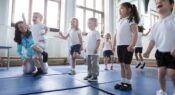
‘Health and Physical Education (HPE) is fundamental for supporting young people to develop the skills and knowledge that will enable them to engage in lifelong health, movement and physical activity behaviours. Ensuring all young people have the opportunity to develop this knowledge is a crucial responsibility for all physical educators.’ Dr Laura Alfrey and Professor Ruth Jeanes share practical strategies for promoting inclusion in HPE.
‘Racism impacts profoundly on the lives of children and young people with major effects on health and wellbeing, and on education and social outcomes.’ In this Q&A, the lead author of a rapid evidence review on the prevalence of racism and racial discrimination experienced by young people in Australia, shares the findings and implications for educators.
What challenges do teachers face when delivering inclusive education? How could we begin to address this? In the first of two articles on the topic, Dr Erin Leif, Dr Laura Alfrey and Dr Christine Grove from Monash University explore these questions.
The Learning Specialist role in Victorian schools is aimed at building excellence in learning and teaching. At this high school, the Learning Specialist Team looks through a leader and teacher lens to utilise the strengths of staff, and meet individual professional learning needs.
The FlexiSpace initiative in Queensland is aimed at reconnecting disengaged students and supporting them to stay at school. Evaluations of the pilot and first phase of expansion provide early evidence of their effectiveness. Peter Kelly, Deputy Director-General at Queensland Department of Education, shares details of the approach, and the impact it’s having in participating schools.
The research-based reading group #edureading brings teachers and academics together on Twitter to engage with research. In today’s article, Victorian teacher Steven Kolber and researchers Dr Keith Heggart and Dr Sandy Nicoll explain why the group was formed, and how it has helped educators contribute to educational research in a meaningful way.
‘[Our school] vision is to develop young people who are active, resilient, lifelong learners. One of the priorities in our strategic plan relates to promoting student voice and agency…’ Richmond High School Principal Dr Lars Andersson shares how staff are working to ensure students are active participants in their learning.
‘While we found that a lot of elements in our lives can be replaced by an online substitute, after a year of lockdowns we still have not been able to replicate the “human” element. The lack of peer-to-peer interaction was perhaps felt most by children.’ Professor John Toumbourou discusses the role of peer support programs in rebuilding student resilience.
A review by researchers at the Telethon Kids Institute into different approaches over the last decade to improving student wellbeing has highlighted six key learnings to help drive decision-making in schools. Find out more about the recommendations and other findings from the review in today’s article.
Facebook
YouTube
SoundCloud
Apple Podcasts
Spotify
RSS feed
Linkedin