Filter by category
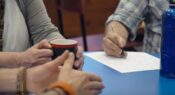
Today’s article, written by Professor Fiona White from the University of Sydney, explores the research pilot she led as a consultant for the new television series airing in Australia on the ABC, The School That Tried to End Racism. The pilot involved 20 students in Year 6 completing a range of activities to challenge their racial biases.
‘Racism impacts profoundly on the lives of children and young people with major effects on health and wellbeing, and on education and social outcomes.’ In this Q&A, the lead author of a rapid evidence review on the prevalence of racism and racial discrimination experienced by young people in Australia, shares the findings and implications for educators.
What challenges do teachers face when delivering inclusive education? How could we begin to address this? In the first of two articles on the topic, Dr Erin Leif, Dr Laura Alfrey and Dr Christine Grove from Monash University explore these questions.
Families will often engage in the shared reading of picture books about starting Kindergarten to help children with their transition. But, how are Kindergarten teachers demographically represented in the books that children read during this time? And importantly, who is missing from these representations?
In this episode of School Improvement, we’re taking you to a school in rural New South Wales where students in Years 5 to 9 are reading 12 books each year. Head of Middle School and English teacher Alex Wharton joins us to share how this has been achieved.
NAIDOC Week is a chance for schools in Australia to celebrate the rich histories, diverse cultures and achievements of Aboriginal and Torres Strait Islander people. The official celebrations run from 4-11 July, but there are lots of teaching and learning resources that can be used throughout the year.
Research has found that educators working in primary schools in Australia lack the confidence and competence to address racial issues in the classroom. As well as this, white normative teaching and the belief that minimising discussions about racism is better than drawing attention to them are common behaviours. In this podcast, we discuss the role of school leaders in addressing these behaviours, and how teachers can confront their own biases.
A refugee student mentoring program has proved to be successful with South Sudanese students at a school in New South Wales. Here, Greg Whitby sits down with Melinda Bowd to discuss how the program supported students by preparing them for life after school.
Creating and implementing a school Reconciliation Action Plan is a way to formalise your commitment to building and sustaining strong relationships with Aboriginal and Torres Strait Islander peoples, embedding respect, and providing opportunities to improve outcomes for students and the wider community.
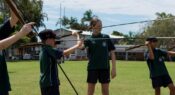
Integrating Indigenous perspectives into the curriculum has seen these Queensland students conduct a hands-on inquiry into the science of the woomera – an Australian Aboriginal spear-throwing device. Find out more about the project and curriculum links in today’s article.
Facebook
YouTube
SoundCloud
Apple Podcasts
Spotify
RSS feed
Linkedin