Filter by category
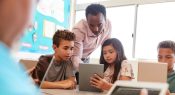
In this podcast, Dominique Beech hears from Joanna Baker, Head of Campus at Haileybury Pangea – the fully online campus of Haileybury, and independent co-educational school. The online campus serves approximately 180 students from a range of backgrounds across Australia and in this episode we hear all about what it’s like to teach students in a virtual classroom setting.
Climate-related content appears across the curriculum and teaching it can come with an added layer of emotional complexity. A new study published in the Australian Journal of Education (AJE) shines a light on how primary and secondary teachers are responding to eco-anxiety in their own classrooms, including where they need more support.
A new insights report on the latest assessment cycle of the Trends in International Mathematics and Science Study (TIMSS) investigates how much curriculum content is actually covered in classrooms, and whether differences are linked to student achievement.
Media and Artificial Intelligence Literacy (MAIL) has been announced as the innovative domain for PISA 2029. The OECD has already released the first draft framework, offering an early understanding of how media literacy and AI literacy intersect and link to other curriculum areas, the key concepts and big ideas, and how to nurture the related competences.
St Theresa’s Primary School Albion in Melbourne’s west is strengthening science learning through a knowledge-rich curriculum focused on Australia’s Great Southern Reef. In today’s article Literacy Leader Jackie O'Connor-Croydon shares more about the P-6 program that integrates field experiences, expert-led learning and sequenced content, to deepen students’ scientific understanding.
Our latest edition of Teacher’s Bookshelf features the open-access resource Teaching Reading Comprehension in a Digital World: Evidence-Based Contributions Using PIRLS and Digital Texts – a collaboration between the IEA and researchers from the Dutch Centre for Language Education. This extract is from the chapter on good practices for teaching and shares an example from Talbot Senior National School, Ireland.
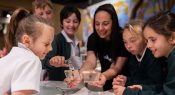
Discover the wide range of curriculum-aligned programs and resources on offer at the Australian Museum and book a world-class outing that draws upon the museum’s vast collections. Crafted by a team of education specialists, the suite of programs provide students with innovative and engaging learning opportunities across primary and secondary learning stages.
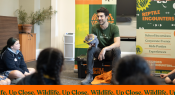
At Reptile Encounters, we bring Australia’s incredible wildlife directly into classrooms. Our mobile zoo of native animals like reptiles, amphibians, mammals, and birds gives students the rare opportunity to experience real, living creatures, right where they learn. Through interactive, curriculum-aligned presentations, students engage their senses, deepen their scientific understanding, and build lasting emotional connections with nature.
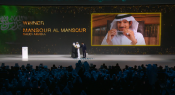
The winner of the 2025 Global Teacher Prize has been announced. Mansour Al Mansour from Saudi Arabia has walked away with the US $1 million prize. One Australian teacher was a top 10 finalist this year – Brett Dascombe, a Senior Geography Teacher from Wavell State High School in Brisbane. In this special podcast episode, Brett shares how he exposes his students to real-world, project-based learning by embedding geospatial technologies like GIS, drones and remote sensing data into the geography curriculum.
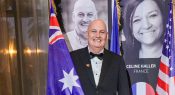
The winner of the 2025 Global Teacher Prize has just been announced. Mansour Al Mansour from Prince Saud bin Jalawi School in Saudi Arabia has walked away with the US $1 million prize. Mansour was recognised for his strategic vision and unwavering belief in his students' potential, and for building an inclusive and innovative learning environment.
Facebook
YouTube
SoundCloud
Apple Podcasts
Spotify
RSS feed
Linkedin