Australia’s results from the Teaching and Learning International Survey (TALIS) have just been released. The survey captures the firsthand knowledge and experiences of school educators. Here we explore some of the key findings on staff wellbeing, collegiality, mentoring support, and use of AI.
The Australian Council for Educational Research’s (ACER’s) Pru Mitchell was named winner of the inaugural Victorian Library and Information Award (VLIA). Teacher editor Jo Earp sat down with her to talk about teaching and teacher librarianship, sharing knowledge and expertise, and the role of AI, technology and digital literacy in the classroom.
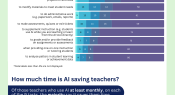
The Walton Family Foundation partnered with Gallup to find out how US teachers are using AI tools in the classroom and the potential for it to save time. Over 2,200 K-12 teachers responded to a survey in April 2025. Here’s a snapshot of some of the findings on how frequently teachers use AI for 9 different tasks, and how many save time by doing so.
‘Staff are integrating AI into their practice in ways that align with their readiness, confidence, and classroom context.’ In today’s article, Georgie Facci from Scotch College Junior School, Adelaide, shares how the school is embedding AI into the teaching and learning across the curriculum, and how staff are building their confidence and capabilities to foster a culture of empowered experimentation.
Staff and students at Adelaide Botanic High School have been using EdChat, a generative AI tool developed by the South Australia Department for Education, since 2023. In today’s article, principal Sarah Chambers shares examples of how the tool is being used by students to support learning, and by staff to reduce workload.
Schools across Australia are marking Children’s Book Week this week, and library spaces are at the heart of the celebrations. They’re a hub of expertise throughout the year, supporting teaching and learning. In this article, we share new research findings about their evolving role.
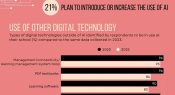
A new report presents 2025 survey data from 104 senior staff in Australian schools about their school’s use of digital technology. The findings show that most schools are using AI tools and that the use of other digital technology has changed since 2023.
'In embracing EdChat, we chose responsiveness over rigidity, learning over waiting, and trust over control.’ In his latest column, Professor Martin Westwell – Chief Executive of the South Australian Department for Education – shares the thinking behind a generative AI chatbot that has been custom-built for teaching and learning, and its initial impact.
Alongside the exciting opportunities for AI to support teaching and learning, there are challenges and risks. In this special podcast Teacher editor Jo Earp talks to Dr Katie Richardson, Senior Research Fellow at the Australian Council for Educational Research.
‘By focusing on future-orientated education, we can find innovative solutions to the megatrends our planet faces.’ In his first Teacher column for 2025, OECD Director for Education and Skills Andreas Schleicher shares finding from the latest Trends Shaping Education report, and the implications for teachers, school leaders, students and policymakers.
Facebook
YouTube
SoundCloud
Apple Podcasts
Spotify
RSS feed
Linkedin