Filter by category
Children’s experiences inform the development of their vocabulary and, subsequently, how they view the world around them. As we head into the third year of pandemic challenges and restrictions, interesting themes have continued to emerge through students’ writing.
The transition to primary school is a big step for children and families, and there are many things to consider for educators supporting students in their transition to school. In this article, we outline five further readings that examine successful transitions.
If you’re in a co-education school, look at student enrolments for STEM subjects and participation in STEM-related clubs and extracurricular activities – is there a gender imbalance? A new report shares global examples of effective interventions from primary and secondary education settings.
Our guest on episode 72 of The Research Files is Professor Joseph Ciarrochi from Australian Catholic University’s Institute for Positive Psychology and Education. He’s the lead researcher for projectHOPE – a program that’s notched up success in re-engaging at-risk secondary students with their schooling.
Coping with stress, mental health, and school and study problems were the top three concerns of young people last year, according to the most recent findings from a large study. In this Q&A, two of the report’s co-authors explain how educators can support their students in these areas.
In his first Teacher column of the year, OECD Director for Education and Skills Andreas Schleicher discusses the Trends Shaping Education report, which examines the major economic, political, social and technological trends affecting education.
An overwhelming majority of teachers don’t get enough time to prepare for effective classroom practice or high-quality lesson planning, according to new Australian research. The Grattan Institute report says teaching quality is suffering and students are losing out.
School playgroups benefit children, their families, schools and communities. New Australian research has identified six key features of high-performing school playgroups.
'As we approach the third year of the pandemic, it’s crucial that teachers and students have the opportunity to reset for the school year ahead.' In our latest reader submission, Dr Tom Brunzell shares tools and strategies from trauma-informed and strengths-based practice that can be used to support teacher wellbeing and ensure students are ready to learn.
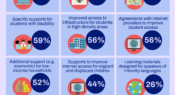
An OECD survey explored how 27 education systems across the globe responded during school closures in 2020. This infographic shows how widely nine different measures were used for at least one level of schooling to target students at risk of exclusion from distance education platforms.
Facebook
YouTube
SoundCloud
Apple Podcasts
Spotify
RSS feed
Linkedin