Filter by category
Karl Easton is a Digital Technology relief from face-to-face (RFF) educator at a primary school in Sydney’s northwest. In this article, we hear how he’s integrating virtual reality into lessons with a range of students in order to provide authentic learning activities.
Does adversity lead to resilience or does resilience lead to less adversity? Professor Andrew Martin from the University of New South Wales and Professor Herb Marsh from Australian Catholic University explore this question in their latest study, share the findings and discuss the implications for teachers.
‘As the COVID-19 situation unfolds, schools are closing to protect their students and the broader public – but this doesn’t mean a stop to learning for students or teachers.’ Dr Anne-Marie Chase and Professor Pauline Taylor-Guy share three phases of research-based decisions education systems and schools should be making now in relation to technology-enabled learning.
Understanding the challenges, as well as the strengths of students with Autism Spectrum Disorder (ASD) can assist teachers to address their needs in an inclusive way. Here, we take a look at five further readings on the topic.
How bullying victims perceive perpetrators and their behaviour is one consideration when choosing intervention strategies. A new study has looked at whether victims of bullying in Australian schools view the perpetrators as individuals or groups.
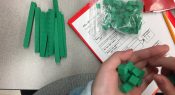
Using simple physical objects that students can visualise, touch and move to express their thinking is an inexpensive and effective classroom resource to explore mathematical concepts and encourage learning.
The Netherlands is one of PISA’s consistent top performers and is often recognised internationally as an example of educational success and a front-runner in supporting struggling learners. Here, we take a look at a project that’s focused on extending gifted learners in the Netherlands.
Professor Paul Caldarella joins Teacher to discuss his three-year project that looked at the relationship between the praise-to-reprimand ratios and the extent to which students focused on class activities.
In our latest reader submission, Dr Chris Drew discusses an education approach that’s a mandated element in Finland’s national core curriculum – Phenomenon-based Learning.
Teachers and school leaders spend considerable effort and time writing and checking student reports, but how effective are they in communicating student learning? We speak to principal Anthony Hockey about what he found when considering this question in his school context.
Facebook
YouTube
SoundCloud
Apple Podcasts
Spotify
RSS feed
Linkedin