Filter by category
Media and Artificial Intelligence Literacy (MAIL) has been announced as the innovative domain for PISA 2029. The OECD has already released the first draft framework, offering an early understanding of how media literacy and AI literacy intersect and link to other curriculum areas, the key concepts and big ideas, and how to nurture the related competences.
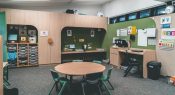
Although often associated with a new school year, transitions occur throughout the school day and across each term. Anna Brady – principal at autism-specific school Aspect Vern Barnett School – shares how each term begins with a deliberate re‑establishment of routines, expectations and supports, and the positive impact on students.
Australia introduced social media age restrictions at the end of last year, sparking widespread global interest. The eSafety Commissioner has released an update on the first 3 months of implementation and in this article, we explore the early impact of the reforms, areas of good practice and concern, and insights from educators and parents.
Our guest on today’s podcast is Kayla Borg from St Mary’s Primary School in Whittlesea, Victoria. She shares how she went about co‑designing a podcast lesson for her year 5 and 6 students in partnership with the eSmart team at the Alannah & Madeline Foundation, what her students learned from this experience, and why real‑world, student‑led digital learning can have such a powerful ripple effect across the entire school community.
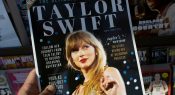
In today’s article Samantha Ephraims from Kalkie State School in Queensland uses the teen fandoms of Taylor Swift and television show Stranger Things as examples of students mirroring the scientific process, and suggests that the fandoms can be used to address a decline in scientific engagement in students.
Participating in professional learning can be energising and inspiring, but introducing what you’ve learned into your own practice – and sustaining it over the long term – can be hard. Taking small, simple steps on a regular basis was a key feature of what endured for teachers in a recent Australian research study of music-based approaches to nurture wellbeing.
Earlier this week, the world celebrated International Women’s Day – an important call to action for advancing gender equality. In this edition of 5 further readings, we share 5 resources on the topic of gender equity in education.
In School Improvement Episode 66, St Columba Anglican School Principal Allan Guihot and Director of Professional Learning Chris Delaney join Jo Earp to talk about the award-winning Teaching School Hubs program, including how the model works in the day-to-day, and benefits for both the trainees preparing to enter the profession and mentor teachers at the host school.
At Al-Taqwa College, a school of more than 2,700 students from prep to year 12, managing data and assessment is a significant undertaking. In today’s article, Assistant Head of Curriculum, Noorun Nisa Abdul Wahid shares how staff collect data, what they do to make sense of it, and how it informs curriculum design, assessment and teaching across the whole school.
In today’s article, Professor Jacqueline Ullman from Western Sydney University explores the importance of school-based connection for gender and sexuality diverse students, why teachers’ responses to homo/transphobic attitudes are paramount, and shares details of a new micro-credential she co-designed to support teachers seeking to create gender and sexuality diversity-inclusive school cultures.
Facebook
YouTube
SoundCloud
Apple Podcasts
Spotify
RSS feed
Linkedin