Filter by category
When you think about student agency, do you picture classroom tasks and surroundings? What about ‘free play’ areas, such as the playground or oval? Here, Rachael Jamieson-Newton and Benjamin Newton share details of a review into primary students’ play at St Paul's Grammar in Sydney, New South Wales.
Families will often engage in the shared reading of picture books about starting Kindergarten to help children with their transition. But, how are Kindergarten teachers demographically represented in the books that children read during this time? And importantly, who is missing from these representations?
‘Schools are increasingly being asked to support the mental health and wellbeing of our children and this has created an opportunity to reframe the teaching the learning environment.’ Ben Sacco discusses three elements – safety, relational trust, and shared language – that can directly support schools to improve teaching, learning and wellbeing.
In this episode of School Improvement, we’re taking you to a school in rural New South Wales where students in Years 5 to 9 are reading 12 books each year. Head of Middle School and English teacher Alex Wharton joins us to share how this has been achieved.
In this reader submission, teacher Martin Poeder makes a case for why Steiner education’s imaginative curriculum delivery is well positioned to meet the future demands of a transforming world, sharing practical examples of students’ engagement with the natural world from his own school in Bairnsdale, Regional Victoria.
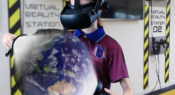
‘[Virtual Reality] cannot be an outcome in itself but needs to be a tool that creates meaningful, authentic and integrated learning opportunities when fully embedded with the curriculum.’ Dr Susan O’Donnell and Adrian Rayner share the five pillars of a successful VR program in education.
In education research, an ‘effect size’ has traditionally been used to sell the promise of improved outcomes, for both teachers and students, in the lucrative professional development market. However, critiquing the quality of research is more important than relying on a single measure, writes Dr Drew Miller.
Australian schools and teachers will be better equipped to help young people navigate the online world safely with the launch of a new national online safety education framework from eSafety.
‘In a digital society threatened by various disruptions such as the COVID-19 pandemic, lifelong learning attitudes have become even more crucial in fostering the resilience and adaptation of youngsters.’ In his latest Teacher column, Andreas Schleicher discusses how teachers, schools, education systems and parents can influence the development of lifelong learning attitudes.
A series of consultations undertaken by the Commissioner for Children and Young People in Tasmania has identified that young people in Tasmania believe a more responsive education system would improve their overall wellbeing, and further, what they think specifically needs to be improved.
Facebook
YouTube
SoundCloud
Apple Podcasts
Spotify
RSS feed
Linkedin