Filter by category
The amount of time children and teenagers are spending on digital technology inside and outside school is having a significant impact on their classroom learning, and physical and mental wellbeing, according to teacher and principal data from an Australian research study.
‘As the evidence for home-supported learning with school-aged students is being rapidly explored, lessons of what works in schools provide a starting point for "best bets" in translating evidence-based practices for learning at home.’ Susannah Schoeffel and Dr Tanya Vaughan take a closer look at some of these ‘best bet’ strategies.
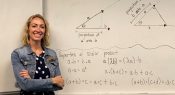
Ashley Stewart, a Mathematics teacher from Newton Moore Senior High School, Western Australia, was named in the top 50 shortlist for the 2020 Global Teacher Prize. She joins us today to discuss her approach to STEM education and how she’s been boosting girls’ uptake and engagement in these subjects.
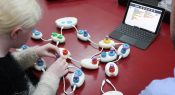
According to research from Vision Australia, only 24 per cent of blind or low vision people living in Australia are in full time employment. A new tool, which assists visually impaired students learn to code, aims to help increase this employment figure.
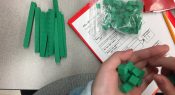
Using simple physical objects that students can visualise, touch and move to express their thinking is an inexpensive and effective classroom resource to explore mathematical concepts and encourage learning.
In our latest reader submission, Dr Chris Drew discusses an education approach that’s a mandated element in Finland’s national core curriculum – Phenomenon-based Learning.
Teacher Ashley Emmerton and Associate Professor John Malouff share details of an international project aimed at providing teachers with strategies for coping with stress, and tips for one strategy – seeking social support.
This month’s edition of Researching Education: Five further readings explores media literacy. We’ve gathered five further readings available on this topic, including two recent research reports looking into the challenge of media literacy education.
When seeking ways to improve students’ academic outcomes, sometimes teachers and school leaders fail to ask for input from those who can offer perhaps the most important perspective – the students themselves.
The Association of Independent Schools New South Wales (AISNSW) has been working with 38 of its schools on a targeted early years program that aims to help students in Kindergarten to Year 2 master key literacy and numeracy skills.
Facebook
YouTube
SoundCloud
Apple Podcasts
Spotify
RSS feed
Linkedin