Filter by category
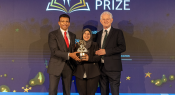
The winner of the inaugural Global Schools Prize – an international US $500,000 prize presented to a school to scale their impact – has been announced as The Alsama Project from Lebanon. Find out more about the winner, and an Australian school that also made it all the way to the top 50, in today’s article.
It’s National Reconciliation Week this week – a time for Australia to consider how we can all contribute to reconciliation in our country. In this Q&A, Reconciliation Australia highlights why this week matters, curriculum resources available for schools, and how you can keep the momentum going beyond National Reconciliation Week.
National Reconciliation Week kicks off next week – a time for all Australians to explore how each of us can contribute to achieving reconciliation in Australia. In this edition of 5 further readings, we share 5 resources on the topic of First Nations education.
In his latest Teacher column, Professor Martin Westwell – Chief Executive of the South Australian Department for Education – discusses the book Students, Students, Students! by Dr Iwan Syahril, who has been at the centre of one of the most ambitious education reforms in the world.
More than a competition, Trop Jr is a rich learning experience that supports curriculum outcomes while strengthening creative confidence and student agency. Find out more about Trop Jr, the benefits, and free classroom resources for Years 5 to 10, including a Teacher Guide to support planning, assessment and curriculum alignment, in this article.
The results from the second cycle of the OECD’s Early Learning and Child Well-being Study (IELS 2025) have just been released. Here we share more about the focus and innovative assessment design of IELS, and an overview of the findings on how children are faring at the very start of their learning journeys.
What do you love about teaching? In our annual reader survey, we ask you what you love about your role. Here, we share some responses we received from secondary school teachers.
In ‘The Relational School: From Behaviour Management to Cultural Transformation’ Sue Chandler shares how schools can go from not only valuing relationships but actively supporting them. This abridged extract for Teacher readers is taken from a chapter discussing change fatigue and building staff readiness.
In this episode of School Improvement, Dominique Beech is joined by teacher Gus Humphries who tells us all about the professional learning program he developed, Questions for Thinking (Q4T). Q4T allows teachers to investigate and develop an area of their practice through a confidential partnership. In our conversation, Gus expands on the program design and the impact it's having on staff and school culture.
‘Learning does not happen when the machine does the thinking for you.’ With generative AI reshaping the educational landscape, Teacher columnist and OECD Director of Education and Skills Andreas Schleicher discusses the importance of guardrails, data protection and human judgement to ensure GenAI becomes a scaffold for learning, not a crutch.
Facebook
YouTube
SoundCloud
Apple Podcasts
Spotify
RSS feed
Linkedin