Filter by category
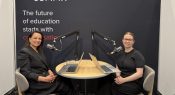
Recorded live at the National Education Summit in Melbourne, Dominique Beech sits down with Professor Miriam Tanti from La Trobe University to find out about the research she and her colleagues have been conducting into the science of learning and Generative AI which has culminated in a free, practical guide for secondary school teachers.
‘The most formidable change we have seen so far is consistency in AI use. Along with staff, students from years 5 to 12 are now working off the same scale and AI use is thought about before a task is set, not discussed after.’ In this article, Jill Fitzsimons, Director of Teaching and Learning at Loreto Toorak shares how staff and students have been supported to use AI, and how the impact of AI is shaping assessment.
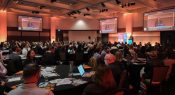
Day one of the Australian Council for Educational Leaders (ACEL) National Conference 2026 has kicked off in Perth with keynotes and presentations on the theme of Bold Leadership: New Frontiers in Education. Presented in partnership with the Australian Council for Educational Research (ACER), the conference has drawn delegates from around the world to explore complex leadership, the future of learning and the evolving role of educators.
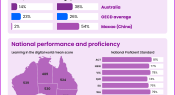
The Programme for International Student Assessment (PISA) shows how well 15-year-olds can apply their knowledge and skills in science, reading and mathematics to real-world situations. In addition to the 3 core domains, an innovative domain important in modern societies is included in each test cycle. In 2025 the innovative domain was ‘Learning in the digital world’. This infographic shares Australia’s performance in an international context.
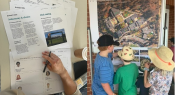
‘Tour a school and you’ll likely see many classrooms displaying finished student work … perfection is visible; process is private. … The Thinking Museum is a classroom routine that makes intellectual growth visible, celebrated, and unforgettable.’ Find out more in our latest reader submission from K-12 teacher Varun S Nair.
Recorded live at the National Education Summit in Melbourne, Teacher’s Deputy Editor Rebecca Vukovic is joined by Jonathan Heard, a Research Fellow at the Australian Council for Educational Research for this School Improvement episode. They discuss the importance of having a shared definition on what critical thinking is, the connection between critical thinking and information literacy, and provide some key takeaways for teachers, teacher librarians and school leaders.
To complement the widely adopted Driving School Improvement books by Pamela Macklin and Vic Zbar, the new Driving School Improvement Workbook offers school leaders a practical framework for turning improvement plans into action. This extract for Teacher readers is taken from a chapter on knowing you are making a difference.
Following the release of the PISA 2025 results last week, Dominique Beech is joined by Dr Jonas Bertling, Research Director of ACER Implementation and Reporting and co-author of the report sharing Australia’s PISA 2025 results, to unpack the 2025 findings and the implications for educators.
‘PILNA helps countries see not only whether students are meeting expected levels, but also the conditions that support or constrain learning.’ The latest results from the Pacific’s largest regional education assessment point to encouraging signs of recovery in student learning, while also identifying key areas where further improvement is needed.
‘Our research shows aspirations for school community engagement in the design of school outdoor spaces are high. … And yet, for many re-designs to schoolyards, engagement does not happen.’ In this article, Hannah Richardson from the University of Canberra shares 3 simple activities for engaging students in schoolyard design.
Facebook
YouTube
SoundCloud
Apple Podcasts
Spotify
RSS feed
Linkedin