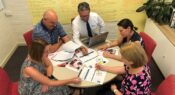
The winners of the annual Prime Minister’s Prizes for Excellence in Science Teaching in primary and secondary schools have been announced. Darren Hamley from Willetton Senior High School in Western Australia and Sarah Fletcher from Bonython Primary School in the ACT were awarded with the prizes, and they both join us in today’s episode.
In yesterday’s reader submission, Michelle Lucas looked at some of the misconceptions around gifted and high-achieving students. In this follow-up article she shares four interventions to address underachievement and meet the needs of gifted students.
‘The underachievement of gifted and high-achieving students is, in part, propagated by the dangerous myth that they will succeed regardless.’ In this reader submission, Gifted and Talented Coordinator Michelle Lucas looks at some of the misconceptions.
‘Being reflective by collaborating with colleagues, committing to improvement, building on current skills and knowledge and sharing with others is vital for all educators.’ Here, we speak to school leaders about the importance of and skills needed for reflection.
‘This alternative paradigm is more than a different way of structuring the curriculum; it invites new ways of thinking about teaching, learning, assessment and reporting—in a sense, a redefinition of “normal” practice,’ Professor Geoff Masters AO writes in a new Teacher article.
In this episode of The Research Files we talk to Dr Katherine Dix about the importance of school libraries, some of the different models being used by schools, and the connection between the value leaders place on their library and its representation on the school website.
In this episode of our Teaching Methods series we talk to Maura Manning, Director of Learning at the Catholic Education Diocese of Parramatta, about the blended learning model at School of Now – what it means for teachers and teaching, the focus on equity of access, and how students are supported in their learning.
Teachers are asked to respond to new and uncertain situations all the time – from keeping abreast of subject knowledge updates to making quick pivots when a lesson isn’t quite going to plan. Dr Rebecca Collie joins us in this podcast episode to discuss teacher adaptability.
Researchers from the University of Newcastle’s Teachers and Teaching Research Centre, Laureate Professor Jenny Gore, Associate Professor Jess Harris and Dr Drew Miller discuss their latest research that explores the impact of Quality Teaching Rounds on student outcomes.
It is important that teachers are empowered to develop strategies and resources to support the emotional, cognitive and psychological development of students experiencing trauma. In today’s article, we speak to a principal about why she participated in a trauma-informed workshop, and how it has helped her staff to better support students in their learning.
Facebook
YouTube
SoundCloud
Apple Podcasts
Spotify
RSS feed
Linkedin