Filter by category
We know that early literacy development is not uniform. Understanding students’ strengths and identifying gaps to plan for the next steps, including targeted support where needed – and doing this as early as possible – is a challenge for teachers. A new assessment program from ACER aims to spot literacy difficulties before children fall behind and these gaps widen.
‘The practical challenge of designing units that genuinely extend gifted learners within a mixed-ability classroom, without simply adding more of the same work, remains one of the more complex tasks in primary teaching’. Wesley College’s Lanella Sweet shares a tiered unit of work built around real-world measurement tasks.
A new insights report on the latest assessment cycle of the Trends in International Mathematics and Science Study (TIMSS) investigates how much curriculum content is actually covered in classrooms, and whether differences are linked to student achievement.
In this podcast special, Dominique Beech sits down with Dr Dan Edwards, Acting Head of ACER's Student Learning and Progress Division, to talk about the future of assessment. He shares his insights on how assessment can support students at key transition points across K-12, the impact of AI, and more.
In his latest Teacher column, Professor Martin Westwell – Chief Executive of the South Australian Department for Education – discusses the book Students, Students, Students! by Dr Iwan Syahril, who has been at the centre of one of the most ambitious education reforms in the world.
Media and Artificial Intelligence Literacy (MAIL) has been announced as the innovative domain for PISA 2029. The OECD has already released the first draft framework, offering an early understanding of how media literacy and AI literacy intersect and link to other curriculum areas, the key concepts and big ideas, and how to nurture the related competences.
In this exclusive extract from his new book The Children We Leave Behind: How School Could Be Done Differently, former Australian Council for Educational Research CEO and Teacher columnist, Professor Geoff Masters AO shares details of the Fremantle Fast Track Program – an alternative, senior secondary education program in Western Australia.
In today’s article, Professor Jacqueline Ullman from Western Sydney University explores the importance of school-based connection for gender and sexuality diverse students, why teachers’ responses to homo/transphobic attitudes are paramount, and shares details of a new micro-credential she co-designed to support teachers seeking to create gender and sexuality diversity-inclusive school cultures.
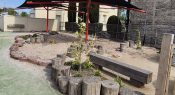
St Mary's Catholic Primary School in Williamstown, Victoria, has a 10-year plan to improve its playground and outdoor spaces. In today’s article, principal Anthony Hockey shares what the school has done to improve the playgrounds so far, what is to come next, and the noticeable impact these changes have already had on student engagement and behaviour.
Our latest edition of Teacher’s Bookshelf features the open-access resource Teaching Reading Comprehension in a Digital World: Evidence-Based Contributions Using PIRLS and Digital Texts – a collaboration between the IEA and researchers from the Dutch Centre for Language Education. This extract is from the chapter on good practices for teaching and shares an example from Talbot Senior National School, Ireland.
Facebook
YouTube
SoundCloud
Apple Podcasts
Spotify
RSS feed
Linkedin