Filter by category
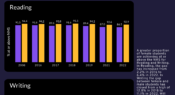
NAPLAN’s National Minimum Standard is the ‘agreed minimum acceptable standard of knowledge and skills without which a student will have difficulty making sufficient progress at school’. Ahead of the 2023 tests, we compare the percentage of male and female students in year 9 achieving at or above the standard in Literacy, over time.
ChatGPT has caught everyone’s imagination. Here, we catch up with founder of Writer’s Toolbox, Dr Ian Hunter. An award-winning academic turned innovator, Dr Hunter is no stranger to the world of AI computing. He holds a patent in AI technology and now runs one of the world’s fastest-growing education platforms.
Why is everyone talking about ChatGPT? In today’s podcast special, we speak with several education experts to hear their thoughts on the potential impact of ChatGPT on teaching and learning – from assessment, to equity in education, and policy decisions. ChatGPT will also be joining us as a guest.
There is much talk about the impact that artificial intelligence-powered chatbots like ChatGPT will have on students, teachers and traditional classroom learning. But what is ChatGPT exactly? And how will it affect the way we approach assessment, issues of equity, and policy decisions in the future? In today’s article, we speak to 3 experts to find out more.
In this reader submission, Dr Nicholas Jackson shares the findings and implications from his recent PhD thesis which involved students training teachers how to use specialist 3D design software and providing guidance and advice on effective ways of teaching of learning with this software.
The latest winners of the annual Prime Minister’s Prizes for Excellence in Science teaching are George Pantazis from Marble Bar Primary School in Western Australia, and Veena Nair from Viewbank College in Victoria. They both join us in this episode to discuss the work they’ve been recognised for.
‘[The start of the school year can] mean a challenging transition for those who struggle with stressors about returning to the classroom.’ Dr Tom Brunzell, Director of Education at Victoria’s Berry Street School, discusses lessons learned on student re-engagement and attendance that could be helpful to other schools.
Student storytelling can often give a glimpse into what’s happening in their lives, their interests and passions, and the issues that are on their mind. The latest instalment of the Australian Children’s Word of the Year reveals online safety is a top concern for students.
Research by eSafety tells us that 45% of Australian children said they were treated in a hurtful or nasty way online in the past year. This Safer Internet Day, Australia’s eSafety Commissioner Julie Inman Grant is encouraging every Australian to moderate their own online behaviour to help stem the negativity and abuse that permeate many parts of the internet.
Researchers from the University of Queensland are determined to help teachers to improve the air quality in their classrooms, improve students’ cognitive performance and decrease the risk of contracting COVID-19 at the same time.
Facebook
YouTube
SoundCloud
Apple Podcasts
Spotify
RSS feed
Linkedin