Filter by category
As a teacher, you’ll likely remember your first few years in the profession and the support that made a difference to you. But what does the research say about how schools can best support early career teachers? Ebony Malzek from Monash University joins Dominique Russell in this podcast to discuss new research in this area.
‘Technology does not work in the same way or to the same effect in all classrooms and with all students.’ In the final instalment of his 3-part series on technology in education, Dr Ralph Saubern addresses the challenges – and opportunities – in evaluating the impact of EdTech on learning outcomes.
‘We all feel the pressure of keeping up with the latest technology innovations. This is especially true in schools where we are preparing young people for the future.’ In part 2 of his 3-part series on technology in education, Dr Ralph Saubern questions how schools and teachers can choose the right EdTech in the first place.
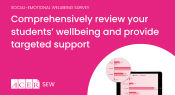
Research shows that higher wellbeing in young people is linked to strong connections with others and well-developed social-emotional skills. The Social-Emotional Wellbeing (SEW) survey is a valuable resource for schools aiming to understand and support the wellbeing of students. Find out more in this article.
In learning about science at school, students frequently apply their knowledge and skills to tasks that require multiple steps – such as solving a problem, forming an argument, or undertaking an analysis. Michael Rosenbrock explains that scaffolding can be a valuable way to support students to develop and extend their knowledge and skills. One way to do this is by using worked examples.
Effective feedback drives improvements in teaching and learning. What happens to the feedback that you give students? In our latest reader submission Andreas Katsanos – Berwick Campus Head of Commerce at Beaconhill College in Melbourne, Victoria – shares how he’s been improving his own practice in this area by implementing a 3-stage feedback loop.
‘What we've done is aimed to answer the questions about how to enact global citizenship and what does it look like when you do it well?’ In this episode of our Global Education podcast, Dominique Russell is joined by ACER Senior Research Fellow, Rachel Parker, to unpack the new Global Education Monitoring Toolkit.
The Butterfly Foundation’s BodyKind Online Education program will be available to schools in early 2025. In today’s article, Head of Prevention at Butterfly Danni Rowlands discusses what the program is exactly, some of the results of the pilot evaluation of the program, and discusses how it supports a safer online experience for young people in Australia.
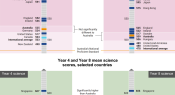
Results from the latest cycle of the Trends in International Mathematics and Science Study (TIMSS 2023) have just been released. Today’s infographic looks at the year 4 and year 8 mean scores in mathematics and science for students in Australia and selected participating countries.
Australia’s year 4 students have achieved the country’s best-ever result in a major international mathematics and science assessment, overcoming the challenges and disruption of pandemic learning in the early years of their schooling. The TIMSS 2023 results have just been released – here’s an overview of the international data and key findings for Australia.
Facebook
YouTube
SoundCloud
Apple Podcasts
Spotify
RSS feed
Linkedin