Filter by category
It’s no surprise that a teacher’s self-efficacy has a huge impact on their classroom teaching. But what aspects of work as a beginner teacher has an influence on how perceived self-efficacy develops? A research report has looked into this and we discuss the findings in this podcast episode.
We’ve collected the details of significant themes and events which might help inspire some of your upcoming lessons for 2021. Here, find out about STEM and literacy events that are scheduled, as well as themes of global significance which you might find relevant.
Andreas Schleicher – Director for Education and Skills at the OECD and long-time Teacher columnist – joins us from Paris for this episode to give his take on all things 2020, talk about the longer term impacts of the school shutdowns and share how different education systems have responded to the pandemic restrictions.
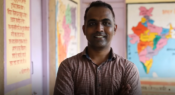
The annual Global Teacher Prize has been awarded for 2020. Ranjitsinh Disale, a primary school teacher in India who has transformed education for girls in his community, has been named winner of the US $1 million award. Here, we look at how he’s improving learning at his school.
Australian students have performed significantly better in the latest cycle of the Trends in International Mathematics and Science Study in Year 8 mathematics and Year 4 and Year 8 science – but not in Year 4 mathematics – than they did in 2015. Here, we take a closer look at the results.
One-to-one and small-group tutoring have emerged as a catch-up strategy for schools to address student learning gaps as a result of the COVID-19 pandemic, with government funded programs announced here in Australia and overseas. Dr Pauline Ho and Dr Tanya Vaughan look at the evidence and give five key takeaways for school leaders and teachers.
In this monthly series, we take a look at some further readings available on a particular topic, including open access research papers from various online catalogues. This month’s theme is science education.
You and your students may have access to lots of technology in your classroom, but are you making the most of it? The Digital Pedagogies Lighthouse Project at St Joseph’s Catholic Primary School has seen staff make the shift from using tech tools for productivity and presentations to embedding them in authentic mathematics learning.
What do you need information on? Strategies for implementing school improvement? Resources for building cultural responsiveness? Ideas for online excursions? The eighth Teacher alphabet brings you quick links to popular content that you might find useful.
‘This alternative paradigm is more than a different way of structuring the curriculum; it invites new ways of thinking about teaching, learning, assessment and reporting—in a sense, a redefinition of “normal” practice,’ Professor Geoff Masters AO writes in a new Teacher article.
Facebook
YouTube
SoundCloud
Apple Podcasts
Spotify
RSS feed
Linkedin