Filter by category
Developing children’s reading skills as they start primary school can often mean meeting children at a range of different levels. In this article, we speak with Dr Lexie Scherer who explains how the reader-response method can help teachers find that special ‘hook’ that can open a child up to the wonders of reading.
‘Best literacy practices in specialist schools look very different to best practice in regular classrooms.’ New research published in the Australian Journal of Education explores the different observational tools needed to understand effective literacy environments in specialist schools.
In this episode in our School Improvement series, we hear from Dr Jason Zagami from Griffith University, who shares some of the current challenges and opportunities of computer education in Australian schools, and how teachers can better prepare for future technological advances.
‘Understanding how students construct information from their prior knowledge … allows classroom educators to determine the extent and type of unlearning needed before introducing new, challenging and truthful information.’ Associate Lecturer Justine Grogan shares some of the findings of her research in Indigenous Education.
In her latest Teacher column, Dr Sue Thomson looks ahead to the release of the PIRLS results, including the aims of this international assessment of Year 4 students’ reading skills, and how data for the 2021 cycle were collected during the pandemic.
‘When you’re in a bush kinder, there are no gendered materials. Everything that’s there is for anybody to play with.’ Recent findings from a Deakin University study reveal that bush kinders can build children’s early confidence and skill development in STEM, especially for young girls.
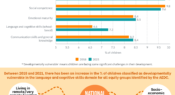
Results from the 2021 Australian Early Development Census (AEDC) collection cycle show that of all early childhood developmental domains, children’s language and cognitive skills have seen the most significant shift. Find out more in today’s infographic.
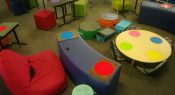
‘There is not a set seating plan. Students choose where to sit according to the task, their learning needs and preferences at any point in time.’ In this reader submission, teachers Heath Henwood and Emily Hales share how they transformed a Year 6 classroom from the traditional rows of desk layout to flexible seating.
In this episode in our Behaviour Management series, Dr Erin Leif and Russell Fox from Monash University join us to answer questions submitted by Teacher readers on trauma-informed practice, strategies for casual relief teachers, and the links between positive behaviour support and academic outcomes.
With the rapid growth in digital technologies, digital writing skills are becoming more and more relevant for students. A new research project from Deakin University will look at the potential to complement traditional writing tasks in schools with contemporary forms of digital writing.
Facebook
YouTube
SoundCloud
Apple Podcasts
Spotify
RSS feed
Linkedin