Filter by category
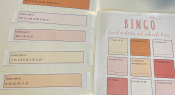
In this video for Teacher, Mathematics teacher Holly Millican shares the resources for 3 activities she has implemented in her classroom to engage students when learning about statistics.
Australia is falling behind when it comes to children’s physical activity, with new challenges for schools brought to the fore through the COVID-19 pandemic. In this article, we outline 5 further readings which explore children and young people’s physical activity in Australia.
Dr Natasha Yates is a General Practitioner (GP) and Assistant Professor of General Practice at Bond University in Queensland. In this Q&A for Wellbeing by Teacher, she unpacks the differences between tiredness and fatigue, and the impact of each on our overall health and wellbeing.
In their second video in a 3-part series for Teacher, Teacher Librarian Mali Jorm shares the details of the second area in a targeted program, The Three Spheres of Library Skills, which scaffolds students to achieve success in 3 core areas of library skills: Readers, Researchers, and Thinkers.
Last month, Holly Millican (a familiar face on Teacher’s YouTube channel) received an Early Career Teacher award. In this article, we find out about the initiatives Millican has been involved in at her school to increase student engagement in learning, which has seen her be recognised nationally.
‘Ultimately, our pilot … has transformed the way we meet the needs of our students and staff, particularly in a post-pandemic landscape.’ In this reader submission, Bridget Garing shares the details of a pilot Pittwater House in New South Wales undertook earlier this year to encourage staff to work collaboratively to support students.
Most schools will have students who experience some level of menstrual pain during their schooling years. So, how well are teachers prepared to deliver menstrual health education, and how can they better support students whose education may be impacted by menstrual pain?
In her latest video for Teacher, Mathematics teacher Holly Millican shares the resources for three activities she has implemented in her classroom to engage students when learning about trigonometry.
When considering the professional development needs of yourself or your staff, what’s ‘important’ doesn’t have to be sacrificed for the ‘urgent’. Here at The Hatchery, we are proud to play a role in supporting educators across Australia and beyond.
Research shows that pragmatic and evidence-based consent education in schools can have both immediate and lasting effects in reducing gender-based violence. In this article, we outline 5 further readings which explore consent education in Australia.
Facebook
YouTube
SoundCloud
Apple Podcasts
Spotify
RSS feed
Linkedin