Filter by category
Parents and families are integral members of a school community, and working with them to improve student outcomes is a key part of an educator’s role. In our latest expert Q&A we speak to ACER Research Officer Simone Griggs and colleagues Greta Rollo, who leads the Primary, Early Childhood and Inclusive Research team, and Research Fellow Dr Kellie Picker, about a resource they’re developing to help practitioners build strong partnerships with families, including how to navigate difficult conversations.
The annual Teacher magazine reader survey has concluded for another year! In today’s article, we share some themes to emerge from your responses about the issues that are important to you, and announce the winner of our $500 prize.
Highly effective schools apply their resources in a targeted manner to maximise outcomes for students. In Sydney, the Narrabeen Elanora Student and Teacher collaboration is comprised of 4 local schools and enables the sharing of facilities and resources. In this episode, we speak to 2 staff members about the collaboration.
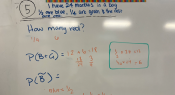
In her latest video for Teacher, Holly Wedd shares the resources for 2 activities she has implemented in her mathematics classroom to engage students when learning about probability.
In this series, we take a look at some further readings available on a particular topic, including open access research papers from various online databases, and Teacher archive content you might not have come across yet. This month, we’re looking at learning progressions for literacy and numeracy.
How many female scientists are mentioned in high school science curricula here in Australia? This question kicks off today’s Teacher Staffroom podcast that highlights some of the key articles, podcasts and infographics we’ve published this month that celebrate women and girls in STEM.
In today’s article, we speak with the winner of the Teacher Awards’ Leadership Award for Driving School Improvement, Melissa Shepherd from Laura State School in far-north Queensland, about how she is committed to improving outcomes for all students.
In 2018, Kristie Schulz from Parklands Christian College wrote 3 articles for Teacher sharing how the school had successfully introduced a new STEM Studies elective for its year 10 students. Five years on, she shares details of research findings looking at the pedagogical framework used and how the program has since been implemented in 3 prep classes.
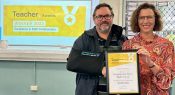
In today’s article, we speak with the winners of the Teacher Awards 2023 in the Excellence in Staff Collaboration category. Bernadette Hawker and Brett Hallett from Goondiwindi State High School in Queensland share how staff work collaboratively across faculty areas to improve student writing outcomes in all year levels and subject areas.
Each year, the Prime Minister’s Prizes for Excellence in Science Teaching recognise the critical role primary and secondary school educators play in inspiring and encouraging students to take up an interest and consider careers in STEM. Last night, Judith Stutchbury and Donna Buckley were named winners of the 2023 prizes.
Facebook
YouTube
SoundCloud
Apple Podcasts
Spotify
RSS feed
Linkedin