Filter by category
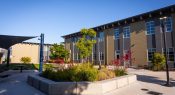
How well is the outdoor space in your school serving students and staff? In this episode of The Research Files, Dominique Beech speaks with Dr Gweneth Leigh and Hannah Richardson from the University of Canberra about their 2-year study into outdoor spaces in secondary school settings, which resulted in plenty of practical tools for educators.
As a school leader, how would you describe your leadership characteristics? How did your induction support you in your transition to a leadership role? In today’s article, we share 5 open-access resources on the topic of school leadership.
If you’re a teacher, developing leadership skills through continued professional education can enhance your skills and build a legacy that goes beyond the classroom. Courses like Rockhurst University Ed.D. programs equip educators with the skills needed to influence educational practice, strengthen school communities, and leave a lasting mark.
In this episode of The Research Files, Teacher editor Jo Earp is joined by Mason Zhou and Professor Dot Dumuid to talk about a South Australian study into the impact of secondary school transition on student wellbeing. One of the key findings is it’s not a short-term dip – students may be struggling in their second year, too.
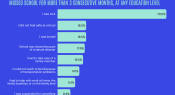
As a school, understanding the reasons for student absenteeism in your context is key to providing targeted support. Drawing on data from PISA 2022, new OECD research shows school attendance problems are widespread and increasing. In this infographic, we share the reasons students missed 3 or more consecutive months of schooling.
Recently the winner of the Global Schools Prize was announced – chosen from over 3,000 nominations. Excitingly, Australia’s Larrakeyah Primary School in Darwin were named as a finalist for the prize. In this episode, Dominique Beech is joined by Fathma Mauger to hear all about the custom-built AI writing platform they were recognised for.
In this episode of The Research Files, editor Jo Earp is joined by Professor Sandra Gattenhof and Dr John Nicholas Saunders who share findings from their study exploring declining enrolment numbers in year 12 arts subjects in Australia. They also talk about the implications for schools, including the arts educator pipeline, and practical supports for out-of-field teachers.
At EDUtech 2026, the Teacher team caught the Australian STEM Video Game Challenge presentation hosted by Lisa van Beeck, ACER Research Fellow and Project Director for the challenge. In this exclusive video for Teacher readers, we recorded the presentation in full. You’ll hear van Beeck walk delegates through the challenge itself and highlight the suite of teacher resources designed to support it.
Absent students miss more than just lesson content; they miss the opportunities to build the habits and skills to succeed at school and in life. New OECD research shows ‘school attendance problems are no longer a marginal issue; they have become a challenge affecting classrooms in nearly every country’.
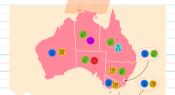
A new report has revealed the most popular ebook genres for K-12 students. The results were calculated by analysing 2025 data from all schools serving students in K-12 across Australia that use the Sora student reading app. Here, we share the most popular genres by state and territory.
Facebook
YouTube
SoundCloud
Apple Podcasts
Spotify
RSS feed
Linkedin