Filter by category
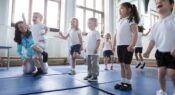
‘Health and Physical Education (HPE) is fundamental for supporting young people to develop the skills and knowledge that will enable them to engage in lifelong health, movement and physical activity behaviours. Ensuring all young people have the opportunity to develop this knowledge is a crucial responsibility for all physical educators.’ Dr Laura Alfrey and Professor Ruth Jeanes share practical strategies for promoting inclusion in HPE.
At the beginning of the COVID-19 pandemic, the Education Endowment Foundation designed and established the National Tutoring Programme in England, with the aim to support the educational outcomes of children from disadvantaged families. In today’s Q&A, we sit down with Emily Yeomans from EEF to discuss the design and implementation, challenges, and key lessons learned that could help others in the future.
Around a quarter of a million students in Australia choose to undertake Vocational Education and Training (VET) in school each year as part of their senior secondary studies. New research, released this month, explores some of the reasons why they choose this pathway, and the factors that lead to effective VET in schools programs.
In this episode of School Improvement, we’re taking you to Ireland where research has been conducted looking at engaging students in the school self-evaluation process in a meaningful way. Shivaun O’Brien from Dublin City University joins us to unpack the impetus for the research and to talk us through some of the findings.
How effectively do you think you’re delivering Indigenous content in the curriculum? Would you say you have enough knowledge and confidence in this area? A program established by the University of New South Wales’ Matraville Education Partnership is looking to address these two areas of teacher practice.
As COVID-19 vaccination rates increase and schools here in Australia and around the world return to on-site learning, teachers and students will need to reestablish face-to-face relationships and routines, take time to reflect on their home learning experiences and think about where to from here. Dr Gail Brown and Dr Carl Leonard offer some advice and questions for reflection in today’s reader submission.
‘Our strong recommendation is to get creative and put real life contexts front and centre of your lessons, making mathematics relevant, engaging and meaningful…’ Justine Sakurai, Carly Sawatzki and Dave Tout discuss contextualised teaching and learning of mathematics through the exploration of six numeracy contexts, and provide several examples of what this could look like in the classroom.
A blob trying to break into the Underworld, a scientist jumping through size-altering portals, and a man who wakes up dazed and confused in a scrapyard – these are some of the protagonists from winning games in this year’s Australian STEM Video Game Challenge.
What is excellence in Indigenous education? And, how is it conceptualised in practice? In this article, researchers from the University of Queensland, Dr Marnee Shay, Dr Jodie Miller and Dr Suraiya Abdul Hameed, share details of their pilot study in Queensland schools that explored these questions.
Today’s article, written by Professor Fiona White from the University of Sydney, explores the research pilot she led as a consultant for the new television series airing in Australia on the ABC, The School That Tried to End Racism. The pilot involved 20 students in Year 6 completing a range of activities to challenge their racial biases.
Facebook
YouTube
SoundCloud
Apple Podcasts
Spotify
RSS feed
Linkedin