Filter by category
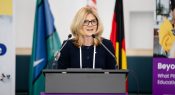
Teacher magazine is delighted to welcome Lisa Rodgers – CEO of ACER – as a columnist. In this first article, she offers a different story about PISA that is built around 5 ideas – position, direction, distribution, resolution and ambition.
Australia’s 15-year-old students continue to perform above the OECD average across science, reading, and mathematics, the latest OECD Programme for International Student Assessment (PISA) results show. In today’s article we share more about Australia’s performance and explore how it compares internationally.
Earlier this year, our podcast with Mandy Nayton – Educational and Developmental Psychologist and CEO of the Dyslexia-SPELD Foundation – explored ways to support students of all ages to read successfully. In the first of 3 follow-up articles, ACU Professor Genevieve McArthur – Director of Research Translation at the Dyslexia-SPELD Foundation – shares how reading difficulties can impact student wellbeing.
Last month, the OECD released findings from the 2025 International Early Learning and Child Well-being Study (IELS). In today's episode, Dr Dan Cloney, Senior Research Fellow at ACER and Lead Researcher for IELS, unpacks some of the key findings from the study, explores what made the assessment design unique, and discusses why it's so important to ensure every child arrives at school with the strongest possible foundations.
In this podcast special, Dominique Beech sits down with Dr Dan Edwards, Acting Head of ACER's Student Learning and Progress Division, to talk about the future of assessment. He shares his insights on how assessment can support students at key transition points across K-12, the impact of AI, and more.
In his latest Teacher column, Professor Martin Westwell – Chief Executive of the South Australian Department for Education – discusses the book Students, Students, Students! by Dr Iwan Syahril, who has been at the centre of one of the most ambitious education reforms in the world.
Media and Artificial Intelligence Literacy (MAIL) has been announced as the innovative domain for PISA 2029. The OECD has already released the first draft framework, offering an early understanding of how media literacy and AI literacy intersect and link to other curriculum areas, the key concepts and big ideas, and how to nurture the related competences.
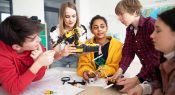
‘If we equip the next generation with the foundational literacies to understand how AI works, the creative confidence to build with it, and the critical judgement to know when and how it should be used, the possibilities are extraordinary.’ In this Q&A, Andrew Sliwinski, Vice President and Head of Product Experience at LEGO® Education, answers questions about computer science and artificial intelligence instruction in the classroom, and what we can do now to empower student agency in a changing world.
In today’s article Samantha Ephraims from Kalkie State School in Queensland uses the teen fandoms of Taylor Swift and television show Stranger Things as examples of students mirroring the scientific process, and suggests that the fandoms can be used to address a decline in scientific engagement in students.
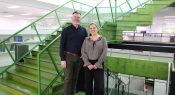
In today’s episode Dominique Russell speaks with the 2 recipients of the 2025 Prime Minister’s Prizes for Excellence in Science Teaching – Paula Taylor from the ACT and Matt Dodds from NSW. They share the lesson activities that are a hit in their science classrooms, the teachers that had an impact on them, and how they’re sharing their knowledge with other educators.
Facebook
YouTube
SoundCloud
Apple Podcasts
Spotify
RSS feed
Linkedin