Filter by category
‘Community collaboration does not need to begin with a new program or excursion. Often, the simplest starting point is creating a small, clear role for an organisation within something your school already does.’ Churchill Fellowship recipient Dr Luke Steller, Questacon Regional Leader for the NT, shares 6 practical ways educators can build stronger school-community partnerships.
Day one of the Australian Council for Educational Leaders (ACEL) National Conference 2026 has kicked off in Perth with keynotes and presentations on the theme of Bold Leadership: New Frontiers in Education. Presented in partnership with the Australian Council for Educational Research (ACER), the conference has drawn delegates from around the world to explore complex leadership, the future of learning and the evolving role of educators.
Recorded live at the National Education Summit in Melbourne, Teacher’s Deputy Editor Rebecca Vukovic is joined by Jonathan Heard, a Research Fellow at the Australian Council for Educational Research for this School Improvement episode. They discuss the importance of having a shared definition on what critical thinking is, the connection between critical thinking and information literacy, and provide some key takeaways for teachers, teacher librarians and school leaders.
The release of the results of the latest cycle of the Programme for International Student Assessment (PISA) made headlines around the world. More than 760,000 students assessed internationally, representing around 33 million 15-year-olds from 91 countries and economies. But the initial data are just the beginning.
‘Neuro-affirming practice requires us to genuinely examine our assumptions, our language, our pedagogical decisions, and our classroom design.’ In this StoryBoard article, Monash University shares how small adjustments and intentional shifts in how educators design learning environments, build relationships, and respond to learner differences can make a big difference.
‘Every time we speak about teachers with respect, invest in their expertise, hold high expectations, protect their time for the things that matter most, celebrate their impact, listen to their professional voice and support them to grow, we tell a different story about teaching.’ In her latest Teacher column, Rachael Lehr explores what it means to truly value teachers, and why how we lead them matters just as much.
Ahead of the 2026 ACEL National Conference – presented in partnership with ACER – Teacher editor Jo Earp is joined by Lisa Newland, CEO of ACEL, and Lisa Rodgers, CEO of ACER, to unpack the conference’s theme of bold leadership. Lisa and Lisa tell us about their approach to leadership, what they’ve learned over the years, and more.
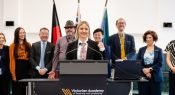
The transition from being a 'good' teacher to an 'exceptional' one often requires more than just experience; it can be enabled by a deliberate, evidence-informed space for reflection and inquiry. This is the core mission of the Victorian Academy of Teaching and Leadership, whose flagship Teaching Excellence Program and Teaching Impact Fellowships are reshaping the professional landscape. Find out more in today’s article.
At Para Hills High School, Quality Teaching Rounds is more than a professional learning program. It’s part of how the school supports teachers to learn from one another, continually refine their practice, and ultimately, improve outcomes for every student. In today’s StoryBoard article, hear all about how it works in practice.
It’s National Science Week – a time to celebrate curiosity, inquiry and shared learning. In today’s article, we learn more about the Victorian Space Science Education Centre and how its immersive STEM experiences contribute to knowledge acquisition, but also to the development of teamwork, communication, resilience, and connection.
Facebook
YouTube
SoundCloud
Apple Podcasts
Spotify
RSS feed
Linkedin