Filter by category
In early childhood settings, educators often navigate a familiar tension: how to honour children’s play as the foundation of learning while ensuring curriculum expectations are met? In today’s article, early childhood educators Helen Bartlett and Lauren Bastion explain how they built a curriculum-tracking platform that analyses children’s learning stories and generates visual curriculum insights.
In his new Teacher column, Professor Martin Westwell – Chief Executive of the South Australian Department for Education – shares findings from a major systematic review of persistence and academic resilience across K-12 education. He highlights how persistence and resilience are not fixed personality traits but rather a part of the learning process, shaped by task design, classroom conditions, and how teachers respond when students struggle.
Crayola is celebrating the fifth anniversary of Crayola Creativity Week – a global celebration that invites millions of children to explore how creativity fuels learning. Teachers can sign up for free access to a dedicated Teacher Guide, daily educational activity videos, downloadable Thinking Sheets and creative challenges.
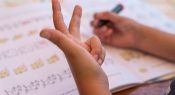
Do your students count on their fingers for mathematics tasks? Do you encourage them to count on their fingers, or do you focus on supporting them to make calculations mentally? New research from Switzerland suggests finger counting has a positive impact on student outcomes, but only when it’s used at a specific age.
In this expert Q&A Amy Ayres – President of the Science Teachers’ Association of New South Wales – discusses integrating technology into science instruction and improving students’ critical thinking or inquiry skills. These were 2 areas of future PD need highlighted in the latest Australian TIMSS teacher questionnaire findings.
‘I wanted to make a meaningful change in how our kids see themselves as mathematicians.’ Mathematics teacher Holly Wedd has been making a significant difference to the way students at her school succeed in maths by boosting their confidence and reducing mathematics anxiety.
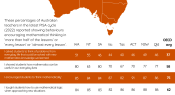
Each cycle of the global Programme for International Student Assessment (PISA) includes a teacher questionnaire. One questionnaire topic – encouraging mathematical thinking – can help foster critical thinking, enhance problem-solving skills and allow students to see the relevance and connectedness of mathematics in their lives.
What opportunities are available to your students to develop skills in data analysis, game theory and digital citizenship? eSports might be one vehicle for schools. In this article we speak to the eSport Coordinator at Ripley Valley State Secondary College to find out about its eSport Academy.
Our latest edition of Teacher’s Bookshelf features the open-access resource Teaching Reading Comprehension in a Digital World: Evidence-Based Contributions Using PIRLS and Digital Texts – a collaboration between the IEA and researchers from the Dutch Centre for Language Education. This extract is from the chapter on good practices for teaching and shares an example from Talbot Senior National School, Ireland.
How are you engaging students in STEM subjects and empowering them to choose a career in STEM? These are the aims of the Australian STEM Video Game Challenge, and the 2025 winners have been announced today. Find out more in today’s article.
Facebook
YouTube
SoundCloud
Apple Podcasts
Spotify
RSS feed
Linkedin