Filter by category
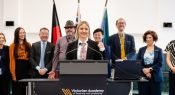
The transition from being a 'good' teacher to an 'exceptional' one often requires more than just experience; it can be enabled by a deliberate, evidence-informed space for reflection and inquiry. This is the core mission of the Victorian Academy of Teaching and Leadership, whose flagship Teaching Excellence Program and Teaching Impact Fellowships are reshaping the professional landscape. Find out more in today’s article.
In this episode Dominique Beech is joined by Dr Rebecca Collie who shares the findings from a new study that captured annual snapshots of teachers’ wellbeing over 6 years since COVID-19. She also reflects on some of her prior research into teacher wellbeing and shares practical tips for school leaders supporting teachers through future education disruptions.
This week we're celebrating Australian Primary Principals Day. To mark the occasion, we sat down with Anthony Boys, Principal of Marist Catholic College, North Shore in Sydney to discuss his approach to instructional leadership and hear how distributed leadership works in practice at his school.
When students are in the early stages of developing skills, knowledge and understanding, or encountering new material and concepts, explicit teaching, and the gradual release of responsibility are crucial for progressing the learning. In today’s article, teacher, instructional coach and researcher Dr Nathaniel Swain discusses the importance of structured approaches, teacher judgement, being responsive to students, and the potential benefits and caveats around shared curriculum materials.
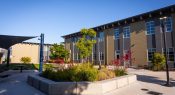
Keuka College, founded in 1890 as a private undergraduate and graduate residential college, is located on the shore of Keuka Lake in New York State’s Finger Lakes region. Keuka College's CSWE-accredited, fully online Master of Social Work (MSW) degree program builds on CSWE standards to help students gain the skills and confidence to meet the needs of a growing workforce.
We know that early literacy development is not uniform. Understanding students’ strengths and identifying gaps to plan for the next steps, including targeted support where needed – and doing this as early as possible – is a challenge for teachers. A new assessment program from ACER aims to spot literacy difficulties before children fall behind and these gaps widen.
‘How can schools help young people learn to use AI thoughtfully, ethically and effectively?’ In today’s article Kara Baxter – Deputy Principal, Learning and Teaching, at Strathcona Girls Grammar School in Melbourne, Victoria – shares the thinking and process behind the development of the school’s AI policy.
How well is the outdoor space in your school serving students and staff? In this episode of The Research Files, Dominique Beech speaks with Dr Gweneth Leigh and Hannah Richardson from the University of Canberra about their 2-year study into outdoor spaces in secondary school settings, which resulted in plenty of practical tools for educators.
As a school leader, how would you describe your leadership characteristics? How did your induction support you in your transition to a leadership role? In today’s article, we share 5 open-access resources on the topic of school leadership.
‘The practical challenge of designing units that genuinely extend gifted learners within a mixed-ability classroom, without simply adding more of the same work, remains one of the more complex tasks in primary teaching’. Wesley College’s Lanella Sweet shares a tiered unit of work built around real-world measurement tasks.
Facebook
YouTube
SoundCloud
Apple Podcasts
Spotify
RSS feed
Linkedin